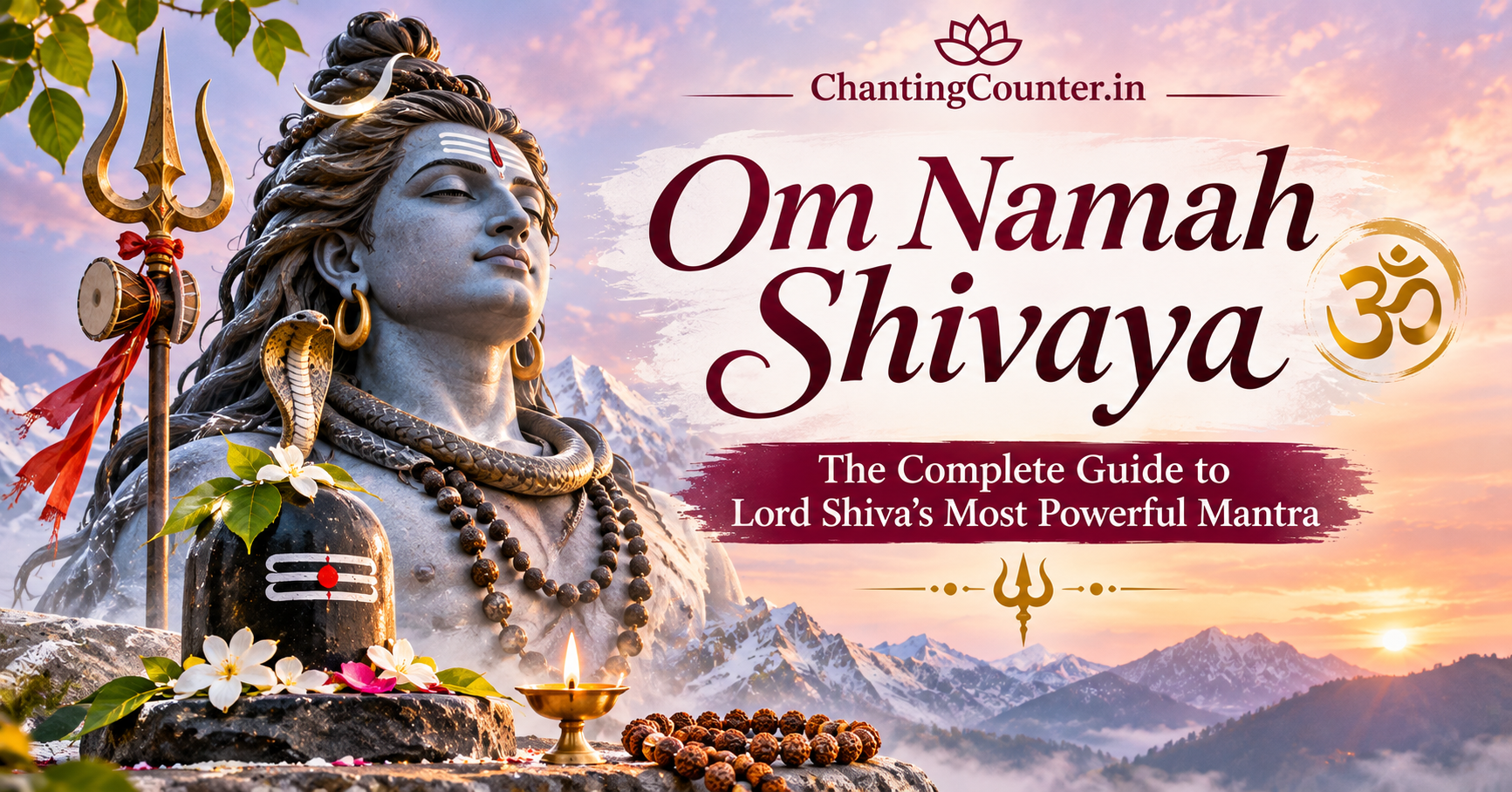
Om Namah Shivaya: The Complete Guide to Lord Shiva's Most Powerful Mantra
📅 May 20, 2025 · ⏱ 6 min
post_top
There is something deeply calming about repeating the words Om Namah Shivaya. Whether you have heard this sacred mantra in a temple, during meditation, or through devotional music, its powerful vibrations have touched the hearts of millions of devotees for generations.
Dedicated to Lord Shiva, the mantra is more than just a prayer. It represents surrender, devotion, self-awareness, and the journey towards inner peace. For many practitioners, chanting Om Namah Shivaya becomes a beautiful way to slow down, quiet the mind, and reconnect with their spiritual selves.
post_1
But what does Om Namah Shivaya actually mean? Why is it considered one of the most sacred mantras in Hinduism? And how can you incorporate it into your everyday routine?
In this complete guide, we will explore the meaning, spiritual significance, traditional benefits, and correct method of chanting Om Namah Shivaya. Whether you are a beginner or someone who already practices mantra japa, this guide will help you deepen your connection with this beautiful Shiva mantra.
1. What Is Om Namah Shivaya?Om Namah Shivaya is one of the most revered mantras dedicated to Lord Shiva, one of the principal deities in Hinduism. Lord Shiva is traditionally associated with transformation, destruction of ignorance, meditation, consciousness, and spiritual liberation.
post_2
The mantra is also known as the Panchakshari Mantra, which means the mantra of five sacred syllables. Its five syllables are Na, Ma, Shi, Va, and Ya. When combined with the sacred sound Om, it becomes Om Namah Shivaya.
In Shaivite traditions, this mantra holds a special place in devotional worship and spiritual practice. It is traditionally chanted to express reverence and surrender to Lord Shiva.
You do not need elaborate rituals or complicated preparations to begin chanting. A quiet space, a few minutes of your time, and a sincere intention are enough to start your practice.
2. Om Namah Shivaya Meaning in English and HindiThe Sanskrit mantra Om Namah Shivaya can be understood as:
English Meaning: I bow to Lord Shiva. I offer my salutations to the divine consciousness that represents the highest truth.
Hindi Meaning: ॐ नमः शिवाय का अर्थ है – मैं भगवान शिव को नमन करता/करती हूँ। यह मंत्र परम चेतना और दिव्यता के प्रति समर्पण को दर्शाता है।
Let's understand its individual components:
- Om (ॐ): The sacred primordial sound, traditionally associated with the ultimate reality and universal consciousness.
- Namah (नमः): Means bowing, offering respect, or surrendering with humility.
- Shivaya (शिवाय): Refers to Shiva, the auspicious and benevolent divine presence.
Together, the mantra expresses devotion and surrender to Lord Shiva. It reminds practitioners to let go of ego, cultivate humility, and move towards greater awareness.
3. The Spiritual Significance of the Five SyllablesOne of the most fascinating aspects of Om Namah Shivaya is its connection with the five elements of nature, known in Sanskrit as Pancha Mahabhutas.
In traditional Shaivite interpretations, the five syllables of the mantra are associated with these elements:
- Na – Earth (Prithvi): Represents stability, grounding, and strength.
- Ma – Water (Jala): Represents purity, adaptability, and emotional flow.
- Shi – Fire (Agni): Represents transformation, energy, and purification.
- Va – Air (Vayu): Represents movement, breath, and life force.
- Ya – Space (Akasha): Represents openness, expansion, and consciousness.
These five elements are traditionally understood as the fundamental building blocks of the material universe.
When you chant Om Namah Shivaya, you can use these associations as a reminder of your connection with nature and the universe. Each syllable offers an opportunity to reflect on balance, stability, transformation, and awareness.
4. Why Is Om Namah Shivaya Considered So Powerful?Om Namah Shivaya is considered powerful because of its deep roots in Hindu spiritual traditions and its association with Lord Shiva.
Unlike prayers that focus primarily on asking for material blessings, this mantra is often associated with devotion, surrender, purification of thoughts, and spiritual growth.
Here are some reasons why devotees consider it especially meaningful:
- It represents surrender: The mantra encourages devotees to release ego and approach life with humility.
- It encourages mindfulness: Repeating the mantra gives the mind a single point of focus.
- It represents transformation: Lord Shiva is associated with the destruction of ignorance and the transformation of consciousness.
- It supports devotional connection: Chanting provides a simple way to express love and devotion towards Mahadev.
- It encourages self-reflection: Regular practice can create space for observing thoughts, emotions, and personal patterns.
For many devotees, the real power of this mantra lies not in the number of repetitions but in the sincerity and awareness with which it is chanted.
5. Spiritual Benefits of Chanting Om Namah ShivayaIn Hindu spiritual traditions, chanting Om Namah Shivaya is associated with several spiritual and emotional benefits. Many practitioners include it in their daily prayers, meditation routines, and devotional rituals.
Here are some commonly described benefits:
1. Encourages Inner Peace
Repeating a familiar mantra can provide a calming point of focus. Instead of allowing the mind to wander endlessly, you gently bring your attention back to the sacred words.
2. Supports Meditation
Om Namah Shivaya can be used as a meditation mantra. Its rhythmic repetition gives beginners a simple way to practise concentration and mindful awareness.
3. Cultivates Humility and Surrender
The meaning of Namah is connected with bowing and surrender. Chanting the mantra can remind you to release unnecessary pride and approach life with greater humility.
4. Encourages Positive Intentions
Regular chanting can become an opportunity to reflect on qualities such as patience, compassion, forgiveness, and self-discipline.
5. Deepens Devotion Towards Lord Shiva
For Shiva devotees, repeating this mantra is a meaningful expression of faith and a way to strengthen their personal devotional practice.
6. Helps Create a Mindful Daily Routine
Setting aside a few minutes every day for mantra chanting creates a dedicated moment for reflection, prayer, and spiritual connection.
Note: These are traditional spiritual associations and personal experiences, not guaranteed medical or supernatural effects. Mantra chanting can be a mindfulness practice, but it should not replace professional healthcare or treatment.
6. How to Chant Om Namah Shivaya CorrectlyYou do not need to be an experienced meditator to begin chanting Om Namah Shivaya. The practice is simple and can be adapted to your daily schedule.
Follow these steps to get started:
Step 1: Choose a Quiet Place
Find a peaceful corner of your home where you can sit comfortably without frequent interruptions. You may choose a prayer room, meditation space, or any clean and quiet area.
Step 2: Sit Comfortably
Sit cross-legged on the floor or on a chair with your back comfortably upright. You do not need to force yourself into a particular posture.
Step 3: Set Your Intention
Before beginning, take a few gentle breaths. You may silently dedicate your practice to Lord Shiva or simply set an intention to cultivate peace, patience, and awareness.
Step 4: Begin Chanting
Start repeating the mantra slowly:
ॐ नमः शिवाय
Pronounce it as: Om Na-mah Shi-vaa-ya.
Try to maintain a comfortable rhythm. You can chant aloud, whisper the mantra, or repeat it silently in your mind.
Step 5: Focus on the Sound
Pay attention to each syllable. If your thoughts wander, gently return your attention to the mantra without judging yourself.
Step 6: Complete Your Practice
When you finish, sit quietly for a minute or two. Notice how you feel and close your practice with gratitude or a short prayer.
7. How Many Times Should You Chant Om Namah Shivaya?There is no single mandatory number of repetitions for chanting Om Namah Shivaya. You can choose a number that feels comfortable and sustainable.
However, many devotees follow traditional counting practices using a mala.
- 11 times: A simple starting point for beginners or a short daily prayer.
- 21 times: A manageable practice when you want to spend a little more time chanting.
- 51 times: A longer devotional practice for those who prefer additional repetitions.
- 108 times: A traditional and widely practised number of mantra repetitions using a japa mala.
- 1008 times: An extended chanting practice followed by some devotees during special prayers and spiritual observances.
If you are new to mantra chanting, start with 11 or 21 repetitions. Gradually increase the count if you wish.
Remember, consistency and sincerity are more important than forcing yourself to complete a large number of repetitions.
8. Why Do People Chant Om Namah Shivaya 108 Times?The number 108 holds special significance in several Indian spiritual traditions. It is commonly associated with meditation, prayer, yoga, and mantra japa.
A traditional japa mala contains 108 beads, allowing practitioners to count each repetition without losing concentration.
Here is how it works:
- Hold your mala comfortably in one hand.
- Begin chanting Om Namah Shivaya while moving one bead at a time.
- Complete one repetition for each bead.
- Continue until you reach the guru bead, also called the Meru bead.
- Pause at the guru bead rather than crossing over it. If you wish to continue, traditionally turn the mala around and chant in the opposite direction.
Completing one full round of a 108-bead mala means you have chanted the mantra 108 times.
A mala makes it easier to maintain your count while keeping your attention on the mantra.
9. What Is the Best Time to Chant Om Namah Shivaya?You can chant Om Namah Shivaya at any time of the day. What matters most is finding a time when you can practise comfortably and consistently.
However, some traditional times are considered especially auspicious for Shiva worship.
Early Morning (Brahma Muhurta)
Brahma Muhurta refers to the early morning period traditionally associated with meditation, prayer, and spiritual practices. Many devotees prefer this time because the surroundings are generally quieter.
During Sunrise
Morning chanting can become a beautiful way to begin your day with devotion and a positive intention.
In the Evening
Evening chanting offers an opportunity to pause after a busy day, reflect on your experiences, and reconnect with your spiritual practice.
During Pradosh Vrat
Pradosh is a traditional period dedicated to Lord Shiva and observed on the Trayodashi tithi of the lunar fortnight. Many devotees perform Shiva puja and chant Om Namah Shivaya during this time.
On Mondays
Monday, known as Somvar, is traditionally associated with Lord Shiva. Many devotees observe Monday fasts, visit Shiva temples, and perform mantra japa.
10. Om Namah Shivaya Chanting on Mondays and Maha ShivratriWhile Om Namah Shivaya can be chanted throughout the year, certain days hold special significance for Shiva devotees.
Somvar (Monday): Mondays are traditionally dedicated to Lord Shiva. Devotees may offer water to the Shiva Lingam, perform prayers, and chant the Panchakshari mantra.
Maha Shivratri: Maha Shivratri is one of the most important festivals dedicated to Lord Shiva. Devotees observe fasting, participate in night-long worship, visit temples, and chant Shiva mantras.
Shravan Month: The holy month of Shravan is particularly significant for Shiva worship. Many devotees undertake special prayers, fasting, and regular mantra chanting during this period.
You do not need to wait for a festival or auspicious occasion to chant. You can connect with the mantra whenever you feel inspired to pray.
11. Om Namah Shivaya and the Practice of Mantra JapaMantra japa refers to the repeated recitation of a sacred mantra. It is an important practice in several Hindu spiritual traditions.
There are three commonly described forms of japa:
- Vaikhari Japa: Chanting the mantra aloud so that it can be heard.
- Upanshu Japa: Whispering the mantra softly, with little or no audible sound.
- Manasika Japa: Repeating the mantra silently in the mind.
Beginners may find audible chanting easier because hearing the words helps maintain concentration. As you become more comfortable, you can experiment with whispering or silent repetition.
There is no need to rush from one method to another. Choose the form that helps you remain attentive and connected to your practice.
12. Using a Rudraksha Mala for Om Namah Shivaya ChantingRudraksha beads have a special association with Lord Shiva and hold an important place in Shaivite devotional traditions.
Many Shiva devotees prefer using a Rudraksha mala for mantra japa because of its traditional spiritual significance.
A standard japa mala generally contains 108 counting beads and one additional guru bead.
Here are a few tips for using a Rudraksha mala:
- Choose a mala that feels comfortable to hold.
- Keep your mala in a clean and respectful place.
- Use one bead for every repetition of the mantra.
- Move the beads gently using your thumb and middle finger, following your tradition.
- Avoid rushing through repetitions simply to finish a round.
If you do not have a Rudraksha mala, you can use a regular japa mala or a digital chanting counter. The purpose of the counting tool is to help you track your repetitions while maintaining focus.
13. Digital Chanting Counter: An Easy Way to Track Your Mantra RepetitionsMaintaining a consistent mantra chanting routine can sometimes be challenging, especially when you are just beginning.
You may lose count, get distracted, or find it difficult to track your daily repetitions. This is where a digital chanting counter can be useful.
A digital chanting counter allows you to count each repetition with a simple button press. Instead of remembering the number in your head, you can focus on chanting the mantra.
For example, if your daily goal is to chant Om Namah Shivaya 108 times, a digital counter can help you keep track of every repetition until you complete your target.
Some useful options include:
- Digital finger counter: A small handheld device that makes counting convenient.
- Digital mala counter: A wearable counter designed for mantra chanting.
- Mobile chanting counter: A smartphone-based option for tracking repetitions.
- Traditional japa mala: A physical bead counter used for devotional practice.
At ChantingCounter.in, you can explore the world of mantra chanting, learn about different counting methods, and discover ways to build a consistent japa practice.
14. A Simple 15-Minute Om Namah Shivaya Meditation RoutineIf you want to include this sacred mantra in your everyday life, try following this simple 15-minute routine.
Minutes 1–3: Prepare Your Mind
Find a comfortable place to sit. Close your eyes if you feel comfortable doing so. Take a few gentle breaths and allow yourself to settle into the present moment.
Minutes 4–10: Chant Om Namah Shivaya
Begin chanting slowly. You can repeat the mantra aloud or use a mala or digital counter to track your repetitions. Focus on the sound and meaning of the mantra.
Minutes 11–13: Silent Mantra Meditation
Stop chanting aloud and repeat the mantra silently in your mind. If your attention wanders, gently bring it back to the mantra.
Minutes 14–15: Gratitude and Reflection
Finish with a moment of silence. Offer a prayer to Lord Shiva or simply reflect on one thing you are grateful for.
Practising for 15 minutes every day can help you develop a meaningful spiritual routine without making it feel overwhelming.
15. Common Mistakes to Avoid While Chanting Om Namah ShivayaMantra chanting is a personal spiritual practice. You do not have to perform it perfectly to begin. However, keeping a few simple things in mind can make your experience more meaningful.
- Chanting too quickly: Avoid rushing through the mantra just to complete your target.
- Focusing only on numbers: Counting is useful, but try to remain connected to the meaning of the mantra.
- Expecting instant results: Spiritual practices are not instant solutions to every problem. Give yourself time to develop a consistent routine.
- Comparing your practice with others: Your spiritual journey does not need to look like someone else's.
- Being too strict with yourself: If you miss a day, simply begin again when you can.
- Ignoring pronunciation: Learn the traditional pronunciation as best as you can, but do not let the fear of making mistakes prevent you from praying.
If you are planning to make mantra chanting a regular part of your daily routine, a few simple spiritual accessories can make your practice more organised and enjoyable.
1. Rudraksha Japa Mala
A traditional 108-bead Rudraksha mala is a meaningful accessory for devotees of Lord Shiva. It can help you count mantra repetitions while maintaining a connection with traditional Shiva worship.
2. Digital Chanting Counter
A digital finger counter or wearable mala counter is useful if you prefer a simple and convenient way to track your daily mantra repetitions.
3. Shiva Mantra Meditation Journal
A spiritual journal can help you record your daily chanting goals, reflections, intentions, and personal experiences. You can also use it to track your consistency over time.
4. Lord Shiva Meditation Books
Books exploring Lord Shiva, Shaivism, meditation, and Hindu philosophy can help you understand the deeper spiritual traditions associated with this mantra.
5. Meditation Cushion
A comfortable meditation cushion can support your sitting posture during longer chanting or meditation sessions.
6. Shiva Meditation or Prayer Beads Storage Pouch
A small mala pouch can help you store and carry your japa mala respectfully while keeping it protected when not in use.
Choose products that genuinely support your spiritual routine. You do not need to purchase everything to begin chanting Om Namah Shivaya.
17. Conclusion: Let Om Namah Shivaya Become a Part of Your Daily LifeOm Namah Shivaya is a beautiful reminder of devotion, surrender, transformation, and spiritual awareness. Its five sacred syllables carry deep significance in Shaivite traditions, while its simple repetition makes it accessible to beginners and experienced practitioners alike.
You do not need hours of free time or an elaborate meditation setup to begin. Start with just 5 or 10 minutes. Sit quietly, repeat the mantra, and allow yourself to experience the practice without pressure or expectations.
Some days your mind may feel peaceful. On other days, it may wander constantly. Both experiences are part of learning to practise mindfulness and devotion.
Remember, the beauty of mantra japa is not simply in completing 108 repetitions. It is in returning to the mantra, again and again, with sincerity and awareness.
Om Namah Shivaya. Har Har Mahadev!
Frequently Asked Questions (FAQs)1. What is the meaning of Om Namah Shivaya?
Om Namah Shivaya means "I bow to Lord Shiva" or "I offer my salutations to Shiva." It is a sacred Hindu mantra expressing devotion, humility, and surrender to the divine consciousness represented by Lord Shiva.
2. How many times should I chant Om Namah Shivaya daily?
You can chant Om Namah Shivaya as many times as you feel comfortable. Beginners can start with 11 or 21 repetitions. Many devotees traditionally chant it 108 times using a japa mala.
3. Can beginners chant Om Namah Shivaya?
Yes. Beginners can chant Om Namah Shivaya without any complicated preparation. You can start by repeating the mantra aloud for a few minutes every day and gradually develop a regular practice.
4. Can I chant Om Namah Shivaya without a mala?
Yes. A mala is not compulsory for chanting this mantra. You can chant without any counting tool, use your fingers, or use a digital chanting counter to track your repetitions.
5. What is the best time to chant Om Namah Shivaya?
Early morning is traditionally considered a favourable time for mantra chanting and meditation. However, you can chant Om Namah Shivaya in the morning, evening, or whenever you have a peaceful moment for prayer.
6. Can I chant Om Namah Shivaya silently in my mind?
Yes. Silent chanting, traditionally known as Manasika Japa, is one of the recognised forms of mantra repetition. You can repeat the mantra mentally while sitting in meditation or during a quiet moment.
7. Why is Om Namah Shivaya called the Panchakshari Mantra?
It is called the Panchakshari Mantra because of its five sacred syllables: Na, Ma, Shi, Va, and Ya. These syllables are traditionally associated with the five elements of nature: earth, water, fire, air, and space.
8. Can I chant Om Namah Shivaya every day?
Yes. You can include Om Namah Shivaya in your daily spiritual routine. Regular chanting can become a meaningful way to practise devotion, mindfulness, and self-reflection.
post_end