What Is a Chanting Counter? Meaning in Hindi, Types and How to Use One
📅 Nov 1, 2026 · ⏱ 4 min
post_top
Have you ever started chanting your favourite mantra, only to lose track of how many times you have repeated it? Perhaps you are practising the Hare Krishna Mahamantra, chanting Om Namah Shivaya, or simply repeating a spiritual affirmation. Keeping count while staying focused can sometimes be challenging.
That's where a chanting counter comes in. It is a small but useful tool that helps you keep track of your mantra repetitions without interrupting your spiritual practice.
post_1
Whether you are new to mantra meditation or have been practising Japa for years, a chanting counter can make your daily routine more organised and consistent.
In this guide, we will explore what a chanting counter is, its meaning in Hindi, the different types available, and how to use one correctly. We will also look at how to choose the right counter for your spiritual journey.
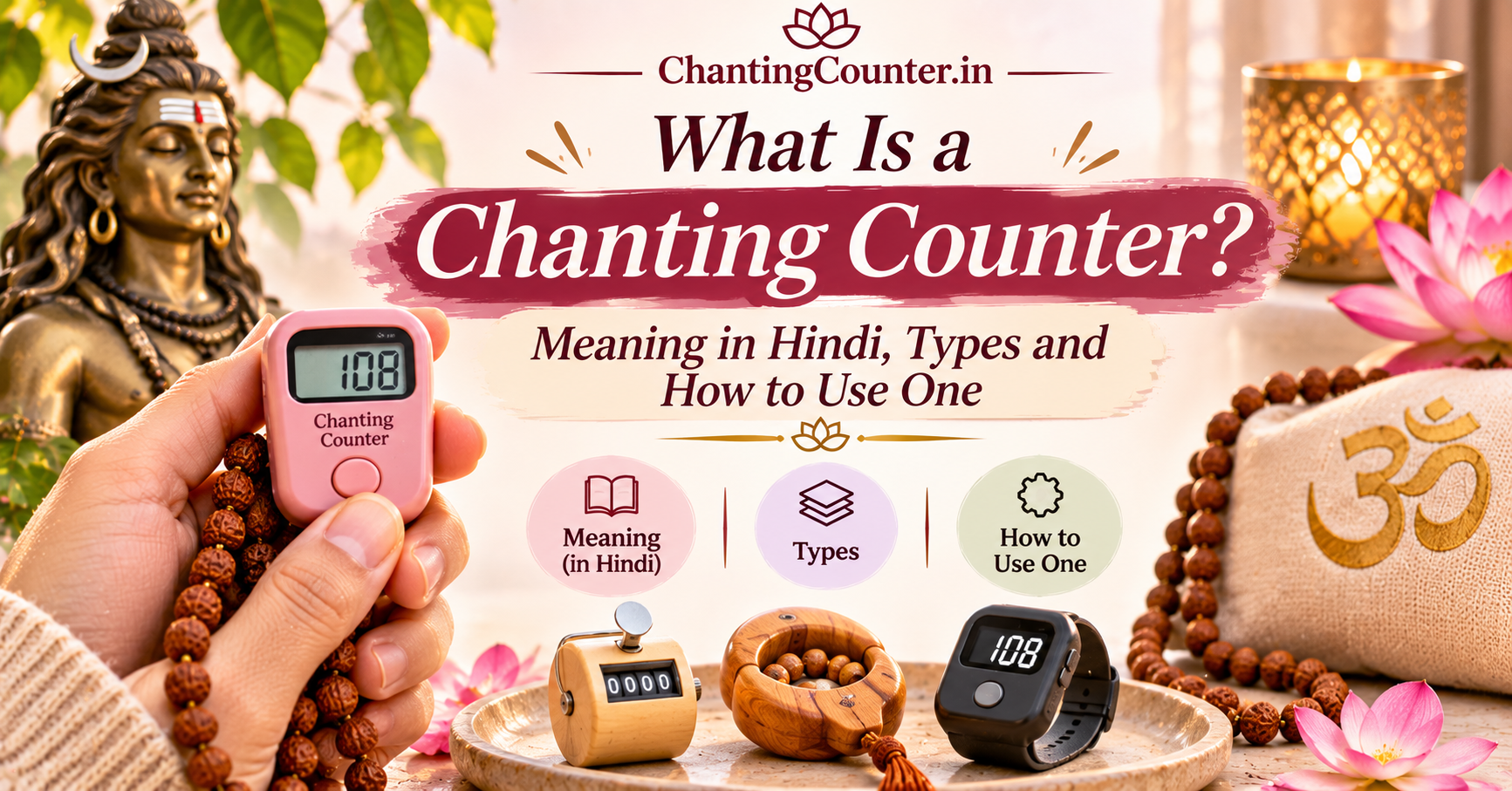
What Is a Chanting Counter?A chanting counter is a small counting device used to keep track of the number of times a mantra, prayer, or sacred name is repeated during a spiritual practice.
post_2
It is commonly used during Japa, which refers to the repeated chanting or remembrance of a mantra or divine name.
Instead of mentally remembering every repetition, you can simply press a button, move a bead, or use your fingers to record each chant.
For example, if you are chanting the Hare Krishna Mahamantra and want to complete 108 repetitions, a chanting counter helps you track your progress without constantly thinking about the number.
Chanting counters are available in several forms, including:
- Digital finger counters
- Traditional Japa malas
- Handheld mechanical counters
- Electronic mantra counters
- Smartphone-based chanting counter apps
Although these tools work differently, their basic purpose is the same: to help you count your mantra repetitions conveniently.
Chanting Counter Meaning in HindiIn Hindi, a chanting counter can be described as मंत्र जाप गिनने वाला यंत्र (Mantra Jaap Ginane Wala Yantra) or जाप काउंटर (Jaap Counter).
It is a device or tool that helps you count how many times you have repeated a mantra, prayer, or God's name.
Here are some commonly used Hindi terms associated with chanting counters:
- जप (Jap): Repeating or remembering a sacred name or mantra.
- मंत्र (Mantra): A sacred word, sound, or phrase repeated during spiritual practice.
- माला (Mala): A string of prayer beads traditionally used for counting mantra repetitions.
- नाम जप (Naam Jap): Repeating or remembering the name of God.
- जप माला (Jap Mala): Prayer beads used for mantra chanting.
For example, when someone says, "मैं रोज़ 108 बार मंत्र जाप करता/करती हूँ," they mean that they chant a particular mantra 108 times every day.
A chanting counter makes it easier to maintain this practice by keeping an accurate count.
Why Do People Use a Chanting Counter?Mantra chanting is a personal spiritual practice. Some people chant for devotion, while others use it as part of their meditation or mindfulness routine.
A chanting counter can support this practice in several practical ways.
1. Helps You Keep Track of RepetitionsWhen you repeat a mantra many times, it is easy to forget the count. A counter keeps track of your repetitions so you can focus more on the chanting itself.
2. Encourages a Consistent RoutineSetting a daily chanting target can help you develop a regular spiritual habit. For example, you might decide to chant 108 times every morning or complete a specific number of Japa rounds each day.
3. Reduces Mental DistractionsInstead of repeatedly wondering whether you have completed 50 or 60 chants, you can use a counting device to track your progress.
This may make your practice feel more organised and allow you to give greater attention to the mantra.
4. Supports Personal Spiritual GoalsSome practitioners set daily, weekly, or monthly chanting goals. A digital counter can help record these repetitions and make it easier to review your consistency.
5. Makes Chanting More ConvenientUnlike traditional prayer beads, a digital counter can often be operated with one hand. This makes it convenient for people who prefer a simple, compact counting tool.
Different Types of Chanting CountersChanting counters come in different designs and styles. Your choice depends on your personal preferences, chanting tradition, and convenience.
1. Digital Finger Chanting CounterA digital finger counter is one of the most popular types of modern chanting counters.
It is a small electronic device that usually fits around your finger like a ring. Each time you press its button, the displayed number increases by one.
Most digital finger counters include features such as:
- Digital number display
- Reset button
- Finger strap or adjustable ring
- Compact and lightweight design
- Battery-powered operation
Best for: People who want a simple, portable, and easy-to-use mantra counting device.
2. Traditional Japa MalaA Japa mala is a traditional string of prayer beads used for counting mantra repetitions. It generally contains 108 beads, along with a larger bead called the Guru bead or Meru bead.
Practitioners move one bead at a time while repeating their chosen mantra. Once they reach the Guru bead, they traditionally turn the mala around rather than crossing over it to begin another round.
Japa malas can be made from different materials, including:
- Tulsi wood
- Rudraksha
- Sandalwood
- Crystal or other traditional materials
Best for: People who prefer a traditional, tactile approach to mantra chanting.
3. Handheld Mechanical CounterA handheld mechanical counter is a simple counting device with a physical button. Every press increases the displayed number by one.
These counters are often used in different counting activities, but they can also be used for mantra chanting.
They generally do not require batteries, making them a straightforward option for people who prefer mechanical devices.
Best for: People who prefer a simple counter with a large, easy-to-read number display.
4. Digital Japa CounterA digital Japa counter is an electronic device specifically designed or adapted for keeping track of mantra repetitions.
Some models are worn on the finger, while others are handheld. Depending on the model, they may include additional features such as a clock, multiple counting modes, or memory functions.
Best for: People who want to track their chanting sessions using an electronic device.
5. Mobile Chanting Counter AppsIf you do not want to purchase a physical device, you can also use a chanting counter application on your smartphone.
Many counting apps allow you to increase your count with a simple tap. Some also offer session tracking, daily goals, and progress records.
However, a smartphone can also introduce distractions through notifications and other applications. If you prefer a quieter practice, a physical counter may be more suitable.
Best for: People who prefer digital tracking without carrying an additional device.
Chanting Counter vs Japa Mala: What Is the Difference?Both chanting counters and Japa malas help practitioners count mantra repetitions, but their designs and usage are different.
| Feature | Chanting Counter | Japa Mala |
|---|---|---|
| Type | Usually digital or mechanical | Traditional prayer beads |
| Counting method | Button press | Moving beads |
| Portability | Compact and easy to carry | Portable but may require a pouch |
| Power | May require a battery | No battery required |
| Counting style | Displays numerical count | Uses beads to track repetitions |
| Experience | Convenient and modern | Traditional and tactile |
Neither option is universally better. The right choice depends on your personal preference and the practices of your spiritual tradition.
How to Use a Chanting CounterUsing a digital chanting counter is very simple. Even if you are completely new to mantra chanting, you can start using one in just a few steps.
Step 1: Choose Your MantraBegin by selecting the mantra you want to chant. It could be the Hare Krishna Mahamantra, Om Namah Shivaya, Gayatri Mantra, or another mantra that is meaningful to you.
Choose something you feel comfortable repeating regularly.
Step 2: Set Your Chanting GoalDecide how many repetitions you want to complete during your session.
Some common chanting goals include:
- 21 repetitions
- 27 repetitions
- 54 repetitions
- 108 repetitions
- 1,008 repetitions
These are examples of commonly used counting targets. You can choose a number that suits your own practice.
Step 3: Wear or Hold Your CounterIf you are using a digital finger counter, place it comfortably on your finger. Make sure the button is easy to press.
If you are using a handheld counter, hold it in your hand in a comfortable position.
Step 4: Start ChantingFind a peaceful place where you can sit comfortably. Take a few slow breaths and begin repeating your chosen mantra.
After each complete repetition, press the counter button once.
For example, if you are chanting "Om Namah Shivaya," press the button after completing the entire mantra, not after every individual word.
Step 5: Continue Until You Reach Your GoalKeep repeating your mantra and updating the counter after each repetition. Try to maintain a comfortable rhythm without rushing.
Step 6: Reset the CounterOnce you have completed your session, note your final count if you want to maintain a record. Reset the counter before beginning your next session.
Some digital counters also have memory functions, so check your device instructions before resetting it.
How Many Times Should You Chant a Mantra?There is no single number that everyone must follow. The ideal chanting target depends on your spiritual tradition, personal commitment, and available time.
Here are some common repetition counts:
- 21 times: A manageable starting point for beginners.
- 27 times: A smaller chanting session that can fit into a daily routine.
- 54 times: Half of a traditional 108-bead mala.
- 108 times: One complete round of a traditional 108-bead Japa mala.
- 1,008 times: A longer chanting practice followed by some devotees.
Remember, consistency and sincerity matter more than comparing your chanting count with someone else's.
How Many Chants Are There in One Japa Mala Round?A traditional Japa mala generally contains 108 counting beads. Therefore, one complete round represents 108 mantra repetitions.
If you complete multiple rounds, your total repetitions will be:
- 1 round = 108 repetitions
- 2 rounds = 216 repetitions
- 4 rounds = 432 repetitions
- 8 rounds = 864 repetitions
- 16 rounds = 1,728 repetitions
This is particularly useful for devotees who follow a structured daily chanting practice.
For example, devotees following the standard 16-round Hare Krishna Japa practice aim to chant 1,728 repetitions of the Hare Krishna Mahamantra each day.
You can read our detailed guide on Hare Krishna Chanting Counter: How to Count 16 Rounds (1,728 Chants) to understand the counting process in more detail.
Tips for Building a Daily Chanting HabitA chanting counter can help you track your repetitions, but building a consistent routine takes patience and commitment.
Here are a few simple ways to make chanting part of your everyday life.
1. Choose a Fixed TimeTry chanting at the same time each day. Morning can be a peaceful opportunity for spiritual practice, although you can choose any time that works for your schedule.
2. Start with a Small GoalIf you are a beginner, avoid setting an unrealistic target. Start with 21 or 27 repetitions and gradually increase your count if you wish.
3. Create a Peaceful SpaceChoose a quiet corner of your home where you can sit comfortably. You may keep your Japa mala, chanting counter, or prayer items in one dedicated place.
4. Focus on the MantraDo not let the counting process become more important than the chanting itself. Use the counter as a supporting tool and gently bring your attention back to the mantra whenever your mind wanders.
5. Track Your ProgressYou can maintain a simple journal to record your daily chanting sessions. Note the mantra, number of repetitions, date, and any personal reflections.
This can help you understand your habits and stay motivated over time.
Common Mistakes to Avoid While Using a Chanting CounterAlthough using a chanting counter is simple, beginners sometimes make a few common mistakes.
- Pressing the button more than once: This can lead to an incorrect count. Develop a consistent rhythm of one press per complete mantra repetition.
- Chanting too quickly: Avoid rushing just to reach your target. Give yourself enough time to pronounce and hear the mantra.
- Focusing only on numbers: Remember that the counter is a tool. Your attention and intention are important parts of your personal practice.
- Setting unrealistic targets: Start with a manageable goal rather than forcing yourself into a demanding routine.
- Forgetting to check the display: Occasionally check that your device is registering each press correctly.
With different designs available, choosing the right chanting counter can feel confusing. Consider these factors before purchasing one.
- Comfort: Choose a counter that fits comfortably on your finger or in your hand.
- Display: Look for clear, readable numbers.
- Ease of use: The button should be easy to press without requiring too much effort.
- Reset function: Make sure you can reset the count conveniently.
- Battery life: For electronic counters, check the battery requirements and replacement process.
- Portability: A lightweight device is easier to carry during travel or daily activities.
- Durability: Look for a device that feels sturdy enough for regular use.
Most importantly, select a counter that makes your chanting practice more convenient rather than complicated.
Recommended Products for Your Chanting PracticeIf you are planning to begin or improve your daily mantra chanting routine, a few simple accessories can make your practice more organised and comfortable.
1. Digital Finger Chanting CounterA digital finger counter is a convenient choice for anyone who wants to track mantra repetitions with a simple button press. Its compact design makes it suitable for daily use and travel.
What to look for: An easy-to-read display, comfortable finger strap, and a reliable reset button.
2. Tulsi Japa MalaA Tulsi Japa mala is traditionally associated with Krishna devotion and is used by many devotees for mantra chanting. Its 108 beads provide a traditional way to count repetitions.
What to look for: A comfortable mala with well-finished beads and a suitable storage pouch.
3. Japa Mala Storage PouchA Japa mala pouch helps keep your prayer beads protected and organised when they are not in use. Some devotees also prefer using a traditional bead bag while chanting.
4. Spiritual JournalA spiritual journal can help you record your daily chanting goals, completed rounds, reflections, and personal intentions.
You can use it to build a consistent practice and look back at your progress over time.
5. Meditation CushionA meditation cushion can make sitting for longer chanting sessions more comfortable. Choose one that provides suitable support for your preferred sitting position.
These accessories are optional. You do not need to purchase everything to begin chanting. A simple mantra and a sincere intention are enough to get started.
Frequently Asked Questions About Chanting Counters 1. What is a chanting counter used for?A chanting counter is used to keep track of mantra repetitions during Japa, prayer, or meditation. It helps you count accurately without having to remember every repetition mentally.
2. What is the meaning of a chanting counter in Hindi?In Hindi, a chanting counter can be called मंत्र जाप काउंटर or जाप गिनने वाला यंत्र. It is a device used to count how many times a person repeats a mantra or God's name.
3. Is a chanting counter the same as a Japa counter?Yes. The terms chanting counter and Japa counter are often used interchangeably. Both refer to tools that help count mantra repetitions during spiritual practice.
4. Can beginners use a digital chanting counter?Absolutely. Digital chanting counters are generally easy to operate. Beginners can use them to start with a small daily chanting goal and gradually increase their repetitions.
5. Is a digital chanting counter better than a Japa mala?Neither is universally better. A digital counter offers convenience and numerical tracking, while a Japa mala provides a traditional bead-based counting experience. Choose whichever suits your preferences and spiritual tradition.
6. How many times should I chant a mantra daily?There is no universal daily requirement. Some people chant 21 or 27 times, while others follow practices involving 108 repetitions or multiple rounds. Choose a target that aligns with your tradition and personal commitment.
7. Can I use a chanting counter for the Hare Krishna Mahamantra?Yes. You can use a digital chanting counter to count complete repetitions of the Hare Krishna Mahamantra. For devotees following the standard 16-round practice, 16 rounds of 108 repetitions equal 1,728 complete Mahamantra repetitions.
Conclusion: Make Every Chant CountA chanting counter may be a small device, but it can be a helpful companion in your spiritual journey. Whether you choose a traditional Japa mala, a digital finger counter, or a mobile application, the purpose is simple: to help you keep track of your mantra repetitions and maintain a consistent practice.
If you are just beginning, start small. Choose a mantra that feels meaningful to you, set a realistic daily goal, and give yourself time to develop the habit.
And remember, spirituality is not simply about reaching a number. A counter can help you count your chants, but the experience of chanting is personal.
Start where you are, chant at your own pace, and let each repetition become a moment of mindfulness and devotion.
post_end